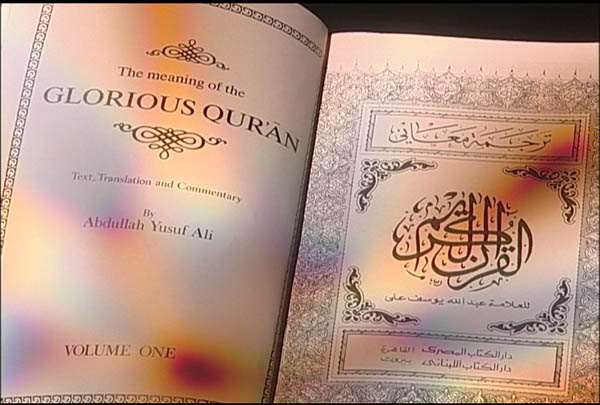
THEMES OF THE QURANBy Nisreen Abass Praise be to Allah, the Lord of worlds, Who says in his Glorious Book, “There has come to you from Allah a Light and a plain book”. Peace and blessings of Allah be upon the noblest of the Prophets and Messengers, our Prophet Mohammed who has said, “ The best of you is who learns the Quran and teaches it.” The Holy Book, the Quran, is the centre of the Muslims’ lives. There are many themes of life in the Quran. The major theme of the Quran is Tauhid (Islamic Monotheism) which is declaring Allah to be the only God. Tauhid has three aspects:
[2:21 O yu people! Adore your Guardian-Lord, who created you and those who came before you, that ye may have the chance to learn righteousness] B) Oneness of the Worship of Allah; Tauhid-al-Uluhiyyah: To believe that none has the right to be worshipped but Allah (eg. Praying, invoking, asking for help from the unseen swearing by Allah, offering sacrifice, giving charity, fasting.) [3:51 "'It is Allah Who is my Lord and your Lord; then worship Him. This is a Way that is straight.'"] C) Oneness of the Names and Qualifications of Allah: Tauhid-al-Sifat. [2:255 Allah. There is no god but He,-the Living, the Self-subsisting, Eternal. No slumber can seize Him nor sleep. His are all things in the heavens and on earth. Who is there can intercede in His presence except as He permitteth? He knoweth what (appeareth to His creatures as) before or after or behind them. Nor shall they compass aught of His knowledge except as He willeth. His Throne doth extend over the heavens and the earth, and He feeleth no fatigue in guarding and preserving them for He is the Most High, the Supreme (in glory).] We have to believe that: (i) We must not name or qualify Allah except with what He or His Messenger صلى الله عليه و سلم has named Him. [3:2 Allah. There is no god but He,-the Living, the Self-Subsisting, Eternal.] (ii) No one can be names or qualified with the names of Allah. [20:8 Allah. there is no god but He! To Him belong the most Beautiful Names.] (iii) We must believe in all the qualities of Allah which Allah has stated in the Quran or mentioned through his Messenger Mohammed صلى الله عليه و سلم, without changing their meaning or likening them(giving resemblance to any other creature). [42:11 (He is) the Creator of the heavens and the earth: He has made for you pairs from among yourselves, and pairs among cattle: by this means does He multiply you: there is nothing whatever like unto Him, and He is the One that hears and sees (all things).] Other major themes that are mentioned in the Holy Book of Allah are: 1. Prophet Mohammed صلى الله عليه و سلم . There are may themes in the Quran about the Prophet (PBUH), some of the themes are: (a) His trip and his rising to the sky (Al-isra’a-and-mi’rag):
(b) The punishment of those who challenge him (PBUH): [4:115 If anyone contends with the Messenger even after guidance has been plainly conveyed to him, and follows a path other than that becoming to men of Faith, We shall leave him in the path he has chosen, and land him in Hell,- what an evil refuge!] (c) His Sending to the people (Bi’tha): [2:129 "Our Lord! send amongst them an Messenger of their own, who shall rehearse Thy Signs to them and instruct them in scripture and wisdom, and sanctify them: For Thou art the Exalted in Might, the Wise."] 2. Prayer: Prayer is the second pillar of Islam. The prayer is the most important thing that the Muslim should do in his life, that’s why it has to be performed at all times: during traveling, if you are unable to pray standing, then you can sit, if you are unable to pray while you are sitting then you can lie down, and you can even perform the prayer with your eyes only. Each prayer should be performed at a specific time. [4:103 When ye pass (Congregational) prayers, celebrate Allah's praises, standing, sitting down, or lying down on your sides; but when ye are free from danger, set up Regular Prayers: For such prayers are enjoined on believers at stated times.] 3. The Unseen (Al-Ghayeb): All Muslims have to believe the unseen eg: the Paradise (Al-Jannah), the Hell Fire (Nar-Jahanam). ]9:72 Allah hath promised to Believers, men and women, gardens under which rivers flow, to dwell therein, and beautiful mansions in gardens of everlasting bliss. But the greatest bliss is the good pleasure of Allah. that is the supreme felicity.] [102:5 Nay, were ye to know with certainty of mind, (ye would beware!) 102:6 Ye shall certainly see Hell-Fire!] 4. Muslims should also believe in the day of Judgment. The Day of Judgment was mentioned in Quran by more than 100 names. [34:21 But he had no authority over them,- except that We might test the man who believes in the Hereafter from him who is in doubt concerning it: and thy Lord doth watch over all things.] 5. Manners: a) Good Manners: The Quran is a guidance to the Muslims in all aspects of life, it teaches its followers good manners. It teaches Muslims brotherhood in Islam, modesty, wisdom, cooperation, cleanliness, peace, etc. [8:61 But if the enemy incline towards peace, do thou (also) incline towards peace, and trust in Allah. for He is One that heareth and knoweth (all things).] b)Bad Manners: The Quran tell Muslims about the manners that a Muslim should not do because they are not accepted by Allah. These manners are greed and being selfish, jealousy, betrayal, theft, lying, etc. [16:105 It is those who believe not in the Signs of Allah, that forge falsehood: it is they who lie!] 6. The Quran talks also about Work. The Quran talks about how Muslims could perform well in their work, how they should cooperate with other Muslim brothers and sisters, how they are supposed to depend only on Allah, how they are supposed to be responsible for their work and they can be successful in their work. The Quran also mentions in a verse that Allah does not make Muslims do what they are incapable of doing, because Allah is the only one who knows what each of us is able to do. [2:286 On no soul doth Allah Place a burden greater than it can bear. It gets every good that it earns, and it suffers every ill that it earns. (Pray:) "Our Lord! Condemn us not if we forget or fall into error; our Lord! Lay not on us a burden Like that which Thou didst lay on those before us; Our Lord! Lay not on us a burden greater than we have strength to bear. Blot out our sins, and grant us forgiveness. Have mercy on us. Thou art our Protector; Help us against those who stand against faith."] |

A) Oneness of the
Lordship of Allah; Tauhid or Rububiyyah: To believe that there
is only one Lord for all the universe, Who is its Creator, Organizer, Planner,
Sustainer, and the Giver of security, and that is Allah.
[17:1 Glory to ((Allah))
Who did take His servant for a Journey by night from the Sacred Mosque
to the farthest Mosque, whose precincts We did bless,- in order that We
might show him some of Our Signs: for He is the One Who heareth and seeth
(all things).]